

GCC Pet BioTech
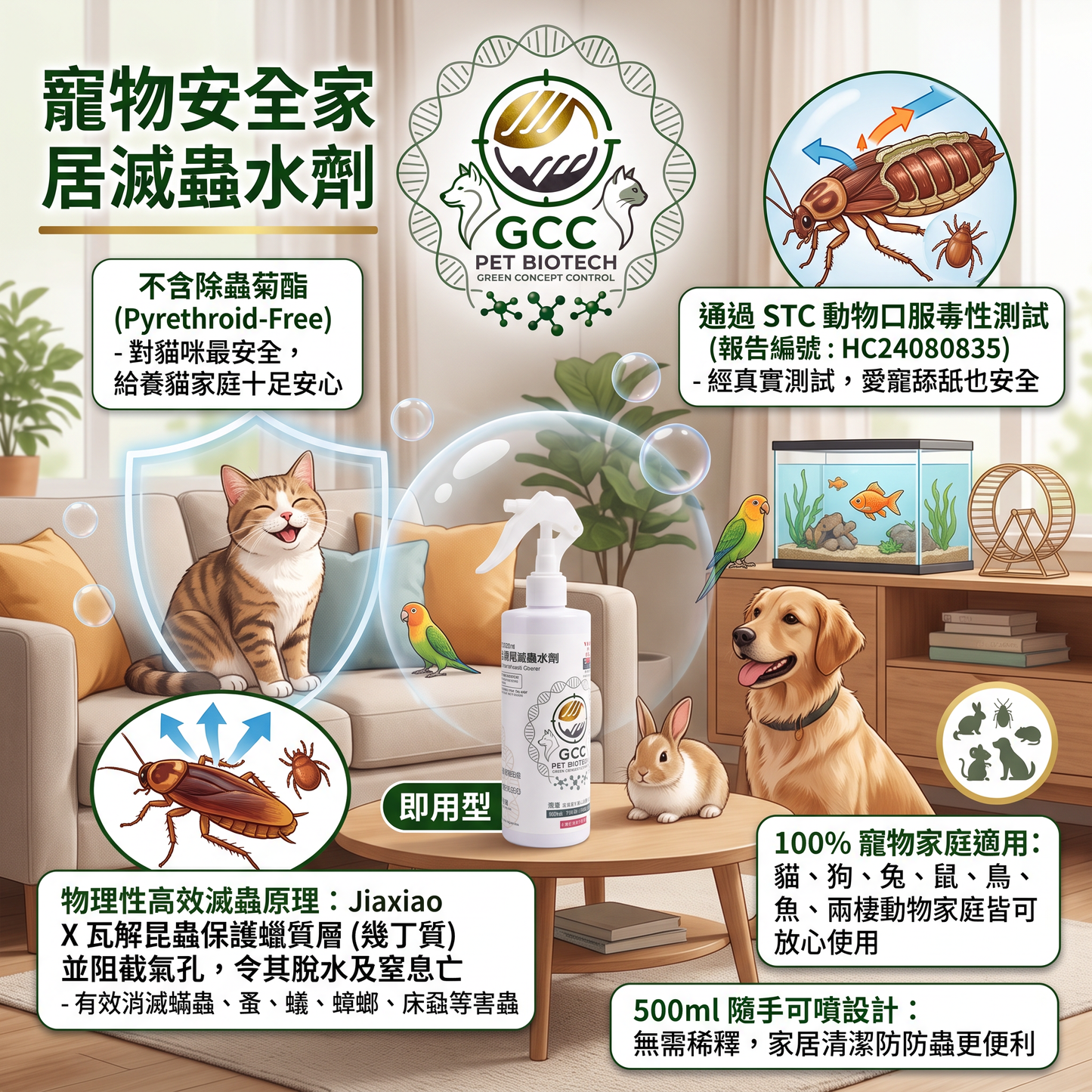
GCC Pet-Safe Insecticide 500ml
Couldn't load pickup availability
GCC Pet-Safe Insecticide Spray 500ml Series:
Fourth-generation pet-safe insecticide spray personally developed by Dr. Gracia Chan, free from pyrethroids and other cat-harmful ingredients.
- Pet-safe, including for cats, dogs, rabbits, amphibians, fish, birds, and other animals.
- Unique formula, no unpleasant odor.
- As those who have used our services know, pet safety is our absolute top priority. Now available for customers in need.
There are currently 4 series available, mainly based on refined Geraniol, targeting different insects.
The following Hong Kong registered pesticides, which are harmful to pets, are NOT used:
1. Pyrethroid
2. Anti-coagulant
3. Organochlorine
4. Organophosphate
5. Amitraz
6. Neonicotinoids
100% pet-safe, unique all-natural pet-safe pesticide, personally developed by Dr. Gracia Chan, manufactured in our own facility in Canada. Due to its natural ingredients and absence of any obvious chemical components, it is exempt from Hong Kong government registration. Pets do not need to leave the area during pest control.
Furthermore, Graciol X is 100% safe for cold-blooded animals, including fish and reptiles.100% Pet-Safe: Cats, Dogs, Rabbits, Rodents, Birds, Fish, Amphibians
Main ingredient: Geraniol (but requires special processing to be used for pets)
The core logic is: to change the molecule's partition coefficient (LogP), shifting it from "tending to stay in body fat and nervous system" to "tending to dissolve in water and be excreted by the kidneys."
If the modified molecule is combined with a polymeric carrier, making its molecular weight greater than 60,000 Daltons (exceeding the glomerular filtration limit), these substances will not enter the renal tubules but will be excreted via the hepatobiliary pathway with feces, or remain on the sprayed surface without being absorbed.
These large molecular substances simply cannot enter the renal filtration system. They are ultimately secreted by the liver into bile and excreted with feces, or are not absorbed by the intestines/skin at all. This avoids secondary damage to the kidneys/animals with kidney disease.
On the other hand, these massive molecular structures are physically unable to penetrate the skin pores of amphibians or pass through the semipermeable membranes of gills. The drug will remain in the water or settle, without entering the bloodstream.